
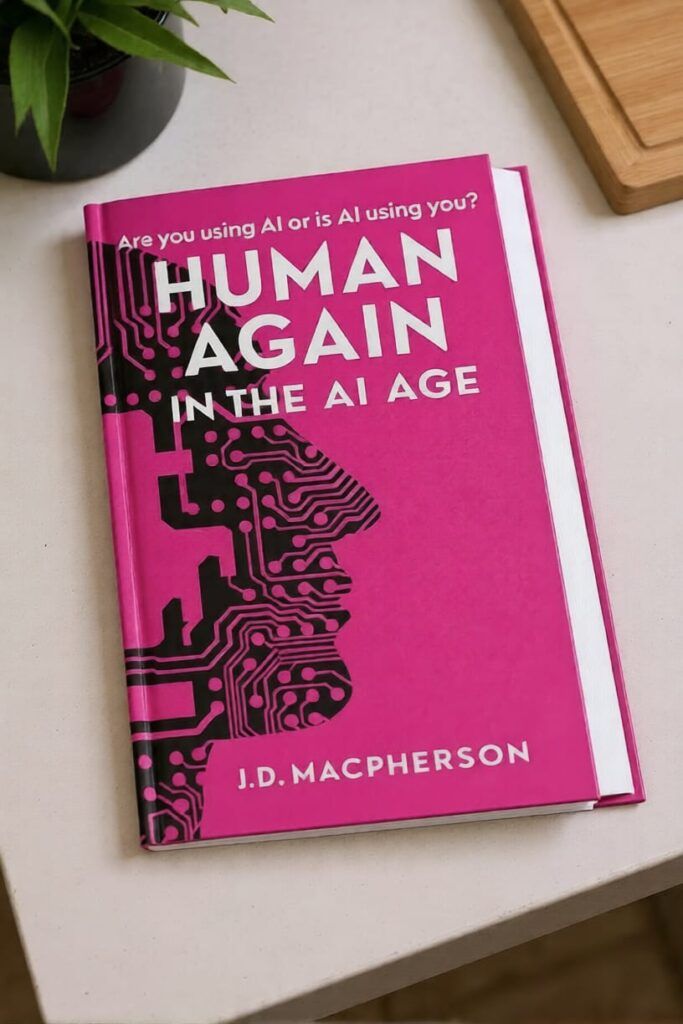

I picked up Human Again in the AI Age expecting a book about artificial intelligence. What I found
instead was a book about us.
J.D. Macpherson does not approach AI with fear or blind fascination. Instead, he approaches it with
curiosity — and a subtle urgency. The structure of the book itself reflects this journey: Discoveries,
Possibilities, Operations, and Pitfalls. It feels less like a tech manual and more like a guided
exploration of what it means to stay human in a world increasingly shaped by algorithms.
In the first section, what stood out to me was how naturally the author introduces AI into everyday
life. From “Ask Chat” to “The Credibility Trap,” he captures something I’ve personally noticed — how
easily we outsource thinking without realizing it. As someone who works in psychology and learning
spaces, this part deeply resonated with me. AI isn’t just a tool; it quietly reshapes how we validate
knowledge.
The Possibilities section is where the book truly opens up. Chapters like Unlocking Creativity, When
AI Meets the Heart, and The Mindfulness Edge shift the narrative from fear to partnership. I
appreciated how Macpherson frames AI not as a replacement, but as an amplifier — if used
consciously. His idea that creativity becomes more valuable, not less, in the AI age felt especially
powerful.
The Operations section is practical without being mechanical. “YOU, The Editor” was a standout
chapter for me. It reinforces the idea that human discernment is the real superpower. Prompt
engineering is discussed not as a technical hack, but as a cognitive skill — a new literacy.
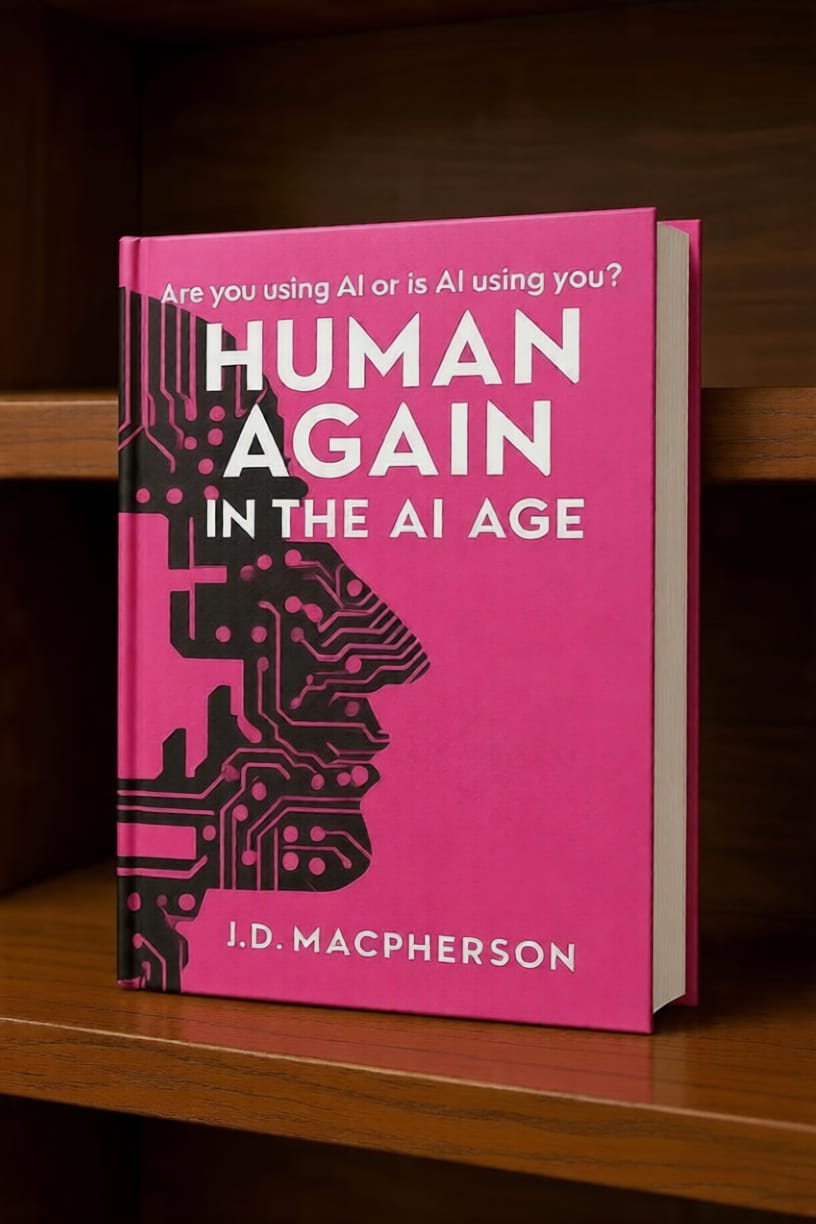
However, it is in the Pitfalls section that the book finds its moral weight. “The Dopamine Trap,” “The
Hallucination Problem,” and “Second Self and the Attachment Illusion” read almost like
psychological reflections. As a psychologist, I found these chapters particularly compelling. The
author acknowledges the seductive nature of AI — the validation, the speed, the illusion of
companionship — and urges readers to remain aware.
What I appreciated most about this book is that it does not dramatize AI as dystopian, nor does it
glorify it as utopian. It insists on something more nuanced: responsibility. The message I walked
away with was simple yet profound — AI can enhance intelligence, but it cannot replace insight.
Knowledge may be free, but wisdom remains earned.
Human Again in the AI Age is not just for tech enthusiasts. It is for thinkers, creators, educators, and
anyone who senses that the world is changing faster than we can process.
If AI is the tool of this century, this book is a reminder that being human is still the point.